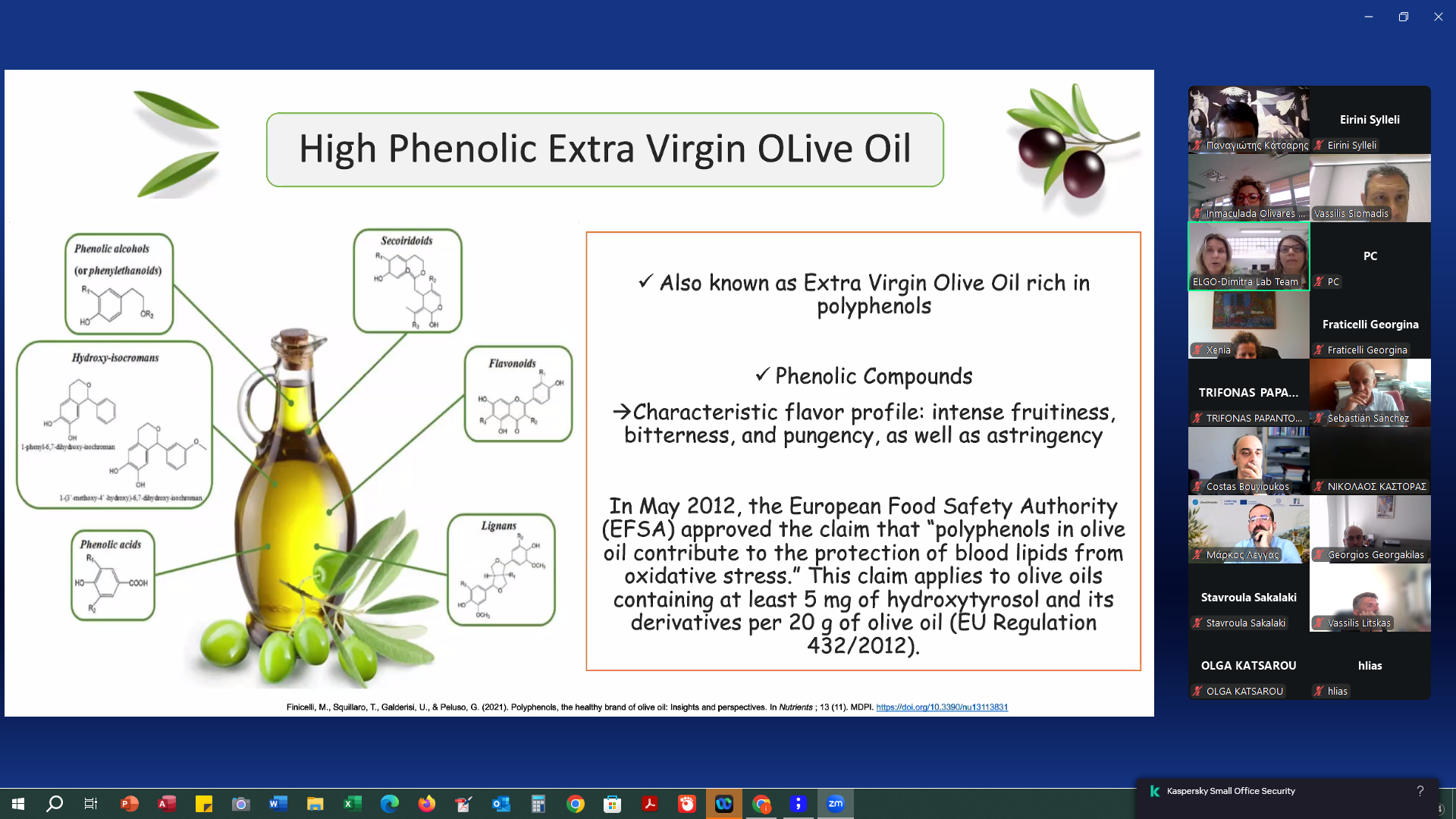

The peer learning event organized online under the theme: “Quality and Authenticity Schemes for Mediterranean Extra Virgin Olive Oils” was successfully completed. The Preveza Chamber, the Hellenic Agricultural Organization ELGO-DIMITRA, and the Region of Peloponnese co-organized the event within the framework of the OliveOilMedNet project of the Euro-MED programme.
The event brought together representatives from key organizations and stakeholders related to the olive oil sector, including the Hellenic Food Authority (EFET), the Independent Authority for Public Revenue (AADE), researchers from ELGO-DIMITRA institutes and laboratories, Chambers of Commerce, Regional Authorities, Universities, Agricultural Cooperatives, as well as a representative of the Innovative Sustainable Economy Mission of the Euro-MED programme. There was also significant participation from olive oil producers, agronomists, researchers, and private sector representatives from various regions of Greece and the Mediterranean.
The event opened with brief welcome addresses by Mr. Georgios Lazaris, Financial Supervisor of the Preveza Chamber, Dr. Spyridon Mamalis, President of the Board of Directors of ELGO-DIMITRA, and Mr. Markos Leggas, Regional Councillor of Peloponnese.
The OliveOilMedNet project was presented by Ms. Eirini Sylleli, agronomist at the Preveza Chamber. The presentations that followed focused on the quality and authenticity of extra virgin olive oil, delivered by Ms. Konstantina Liva and Ms. Evangelia Kounadi of ELGO-DIMITRA. Mr. Panagiotis Katsaris, Agronomist – Biotechnologist at ELGO-DIMITRA, presented the project’s authenticity model for local olive oils. This was followed by presentations on the development of the authenticity database by Mr. Kostas Bougioukos and the authentic digital software by Mr. Georgios Georgakilas, highlighting the role of technology in ensuring quality and traceability.
During the constructive and fruitful discussion that followed, emphasis was placed on the crucial role of innovation. The use of advanced machine learning methods combined with specialized chemical analyses creates a reliable, objective, and scientifically validated framework for verifying olive oil authenticity. This approach enhances market transparency and contributes to the protection of both producers and consumers. Furthermore, the strategic perspective of positioning olive oil as a high value-added product was highlighted, with emphasis on varietal identity, geographical origin, and quality certification. Strong interest was also recorded for the further development and expansion of the authenticity tool to local olive oil varieties.
Finally, the successful implementation of the event highlighted the importance of effective collaboration among scientific, institutional, and production stakeholders. This collaboration constitutes a key pillar for enhancing quality, ensuring authenticity, and strengthening the competitiveness of Greek olive oil in the international market.